
Ascension - Facial Analysis
Ascension Tech LLCBeauty
4.512.00 Reviews
- Version
- 1.3
- Installs
- 50.00K
- Age Rating
- Everyone
Screenshots
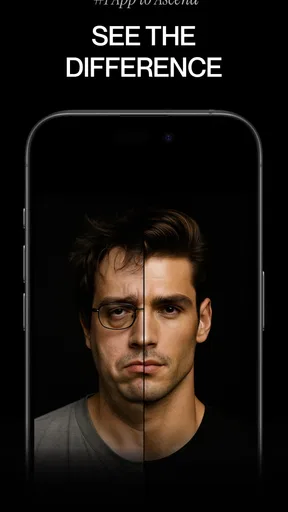
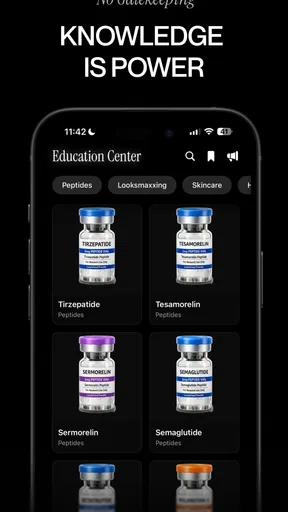
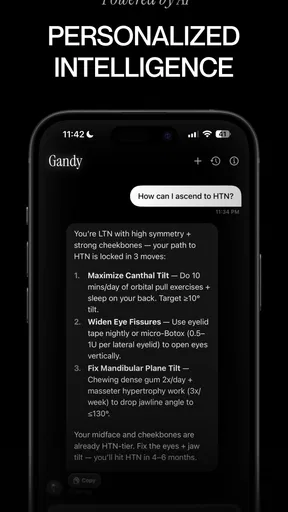
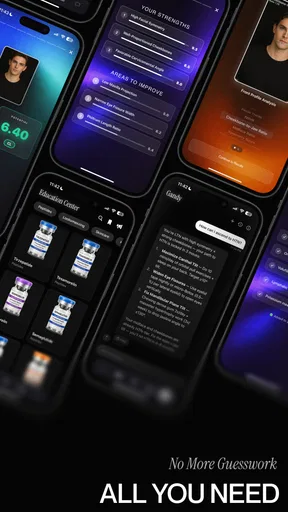
Our Review of Ascension - Facial Analysis
 Analysis by Appyee
Ascension - Facial Analysis is the kind of beauty app I would try when I want a more structured look at my appearance rather than another collection of random style tips. It sits in the beauty category and is built around the idea of improving your overall presentation, with facial analysis as the starting point. My first impression is that it is most useful as a reflection tool: it can help you think about what you want to change, what already works, and which habits deserve attention.
The app is free to install, which makes experimenting with it fairly low-risk. Ascension Tech LLC is the developer, and the app is aimed at Everyone, so it is presented as an accessible option rather than a specialist tool for professional makeup artists or dermatology users. Its store summary focuses on improving your looks and “glowing up,” but I found the more interesting question to be whether it can turn that broad goal into practical decisions.
How I would decide whether Ascension is right for me
Before using any facial-analysis app, I think it helps to define the problem. “Looking better” can mean many things: choosing a haircut, improving a skincare routine, finding more flattering grooming habits, or simply becoming more comfortable in photos. An app like this can be useful for organizing that thinking, but it should not be treated as a medical assessment or as an objective verdict on attractiveness.
My main decision criteria would be simple. First, does the app give me a useful starting point instead of vague encouragement? Second, can I turn what I learn into actions I can actually repeat? Third, does the experience feel comfortable enough to use without becoming overly focused on small facial details? Finally, is the paid layer worthwhile for my personal goal, rather than merely tempting me with the promise of a complete transformation?
That last point matters because beauty apps often work best when the user already knows what they want to improve. If I open one expecting it to solve every concern at once, I am likely to leave with more questions than answers. I prefer using Ascension as a planning aid: identify one or two areas, test a change, and judge the result over time instead of reacting to a single image.
The app currently carries a 4.5 average from around 2.9 thousand ratings, which suggests that many users find the concept appealing. It has also passed the early curiosity stage, with over 50 thousand installs. Those figures make it easier for me to take the app seriously as a real consumer product, while still remembering that popularity does not guarantee that its approach will suit every face, camera, or personal preference.
What facial analysis can and cannot tell you
A facial analysis experience is naturally sensitive to presentation. Lighting, camera position, expression, hair, glasses, facial hair, and even the distance from the phone can change how a face appears. I would therefore use the same kind of lighting and a relaxed expression whenever I compare results. This is one of the most practical ways to avoid mistaking a different photo setup for genuine progress.
I would also avoid making decisions from one scan alone. If the app highlights something I had not considered, I would treat that as a prompt to investigate, not as a final judgment. For example, a perceived imbalance might really be caused by a tilted camera or harsh overhead light. The useful outcome is not accepting every observation as fact; it is learning to separate stable preferences from temporary presentation issues.
This makes Ascension more suitable for style planning than for health concerns. If I were worried about acne, irritation, unusual changes, or another skin problem, I would look to a qualified health professional instead. A beauty app can help me think about appearance, but it should not replace professional advice when the issue involves symptoms or treatment.
A realistic everyday way to use it
Imagine I have a work event coming up and I feel that my usual appearance looks tired in photographs. Rather than buying several products immediately, I could use the app to establish a baseline, then choose one manageable change: a different grooming routine, a more suitable haircut direction, or a better approach to preparing for photos. I would take notes, repeat the same photo conditions after a few weeks, and decide whether the change improved how I feel.
That workflow is more valuable than chasing a dramatic “before and after.” It keeps the app connected to real life. I can ask whether I look more like myself, whether the routine fits my schedule, and whether the result is worth maintaining. In my view, this is where a facial-analysis app earns its place: not by making me obsess over a score, but by helping me turn a vague concern into a small experiment.
Where Ascension stands out among beauty alternatives
The strongest reason to choose Ascension is its focused starting point. Many beauty apps are built around a single category such as makeup tutorials, product shopping, photo filters, or skincare tracking. Ascension approaches the subject from the face itself, which can make the experience feel more personal than browsing generic advice. I appreciate that orientation because it encourages me to begin with my own goals rather than with whatever product happens to be promoted most prominently.
It is also a better fit for someone who wants a private planning moment before asking friends for opinions. Friends can be helpful, but their advice is shaped by their own taste. A structured app experience gives me a separate reference point. I can then combine that perspective with my preferences instead of letting one person’s idea of a “glow up” decide everything.
Another useful insight is that the app can help expose the difference between a feature I want to change and a habit that affects how that feature is presented. Sometimes the issue is not facial structure at all; it may be posture, expression, grooming consistency, or the way I take pictures. I would use the analysis as a reason to inspect the whole presentation, not just the face in isolation.
The app’s free entry point is another advantage. I can see whether the concept fits my mindset before committing money. That is particularly important in beauty, where a polished promise can be persuasive even when the underlying advice is not personally relevant. Starting free lets me judge the tone and usefulness for myself.
Ascension is also relatively easy to understand as a category choice. If I want analysis and direction, it is more relevant than a basic camera filter. If I want step-by-step makeup instruction, however, a tutorial-focused app may be more practical. If I want to monitor a skincare routine, a dedicated tracker may offer a clearer workflow. The best choice depends on whether my main need is diagnosis-like reflection, education, or consistency.
Small habits that make the experience more useful
I would keep a short record of what I changed after using the app. It could be as simple as noting a haircut decision, a grooming adjustment, or a photo habit. This prevents the common problem of forgetting what caused an improvement. It also helps me avoid changing five things at once, which makes it impossible to know what actually helped.
I would compare results in ordinary conditions rather than relying only on flattering images. A useful test is a normal indoor photo, a daylight photo, and a picture taken at the distance where other people usually see me. The aim is not to create a perfect portrait; it is to understand whether a change survives outside the app’s ideal setting.
I would also set a stopping rule. If I find myself repeatedly scanning without making any practical change, the app has stopped helping. At that point, I would close it and return to real-world feedback. Facial analysis should support confidence and decision-making, not become a reason to inspect every detail of my appearance.
Where another type of app may fit better
Ascension is not the right choice for everyone. Someone who already knows they want a specific makeup look may get faster results from a tutorial library. Someone comparing products may prefer a shopping or ingredient-focused service. Someone seeking treatment for a skin condition should choose professional guidance rather than a beauty-analysis tool.
It may also be a poor fit for users who dislike appearance scoring, comparisons, or any experience that encourages self-criticism. Even a well-intentioned analysis can feel uncomfortable if I am already anxious about my looks. In that situation, a habit tracker focused on sleep, hydration, movement, or skincare consistency may be healthier and more actionable.
There is also a practical trade-off between personalization and simplicity. A general beauty guide gives me broad ideas without asking me to interpret a facial assessment. Ascension may feel more relevant, but that relevance requires thoughtful use. I have to question whether a suggestion matches my lifestyle, budget, and identity instead of assuming that every improvement means moving toward one universal standard.
Users who want a fully documented routine should keep their expectations measured. The app’s central appeal is facial analysis and appearance improvement, not necessarily the detailed record-keeping that a dedicated planner would provide. I would choose it for direction, then use my own notes or another tool if I needed a long-term routine log.
What the free-to-paid decision really involves
The app is free, but optional in-app purchases range from about eight dollars to forty dollars per item. That is a wide enough spread that I would not buy anything immediately. I would first use the free experience, decide whether the analysis changes my decisions, and only then consider whether a paid option solves a specific problem for me.
The real cost is not just money. It is also attention. If a paid feature encourages me to keep checking my face without giving me a clear next step, it may not be good value even if the feature feels sophisticated. Conversely, if it helps me choose one practical change and stop searching, it could be worthwhile for someone who values structured guidance.
I would approach the purchase with a written question: “What decision do I expect this to help me make?” If I cannot answer that clearly, I would stay with the free version. This is especially important for a beauty app because the desire to improve can always be extended. There is rarely a natural point at which an app can declare that a person is finished improving.
Switching from Ascension to another beauty tool should be easy if I treat it as one part of my routine rather than the foundation of my self-image. I would save my own observations, keep track of changes independently, and avoid assuming that any paid insight is irreplaceable. That way, moving to a tutorial app, a skincare tracker, or professional advice does not mean losing the progress I made.
Device compatibility is reasonably broad for older Android users because the app supports Android 7.0 and later. The current version is 1.3, and the app was released on March 23, 2026. I would still check how comfortably it runs on my particular phone before building a routine around it, especially if camera-based use is central to my decision.
Who I would recommend it to
I would recommend Ascension to someone who feels stuck between general beauty advice and a very specific makeover plan. It can be a useful middle ground: personal enough to feel relevant, but broad enough to support different goals such as grooming, presentation, and confidence in photos. It is especially appealing if I enjoy experimenting but want a little structure before spending money on products or services.
I would also recommend it to a user who can keep emotional distance from analysis. The best results come from asking, “What can I try?” rather than, “What is wrong with my face?” That distinction sounds small, but it changes the entire experience. One approach creates experiments; the other can create endless dissatisfaction.
I would skip it if I wanted medical answers, guaranteed transformation, or a complete professional consultation. I would also skip it if I already have a clear routine and do not want more appearance-related feedback. In those cases, a dermatologist, stylist, makeup educator, or simple habit system would be a better match.
My recommendation after weighing the alternatives
My overall view is positive, with an important condition: I would use Ascension - Facial Analysis as a decision aid, not as an authority on my appearance. Its free starting point, beauty-focused purpose, and personalized angle make it more interesting than a generic collection of glow-up slogans. The app has enough traction to be worth trying, and its Everyone rating makes it approachable for a broad audience.
What I like most is the possibility of turning uncertainty into a controlled experiment. I can examine how I present myself, choose one change, and judge it in normal life. That is a more grounded use of facial analysis than chasing perfect images or treating an app’s interpretation as a fixed truth.
What holds me back is the same issue that affects this entire category: facial feedback can become too influential. Camera conditions are imperfect, beauty standards are personal, and paid features can make improvement feel endless. I would protect myself from that friction by setting a clear goal, limiting how often I check results, and stopping when the app has answered my practical question.
My final recommendation is to try the free experience first and pay only when a specific decision justifies it. For someone exploring grooming, presentation, or a personal glow-up with an open but critical mindset, Ascension Tech LLC has created a useful starting point. For medical concerns, detailed tutorials, product research, or users who find facial analysis stressful, another category of tool will likely serve them better.
Verdict
Strengths of Ascension - Facial Analysis
- Quick facial analysis with clear, easy-to-read results.
- Simple interface that is accessible for first-time users.
- Useful progress tracking for comparing changes over time.
- Provides personalized insights rather than only basic scores.
- Convenient for private, at-home skincare assessments.
Limitations of Ascension - Facial Analysis
- Results may vary with lighting, camera quality, and facial expressions.
- Some features may require a subscription or in-app purchase.
- Facial analysis cannot replace advice from a qualified dermatologist.
- Uploading facial images may raise privacy concerns for some users.
- Frequent scans can encourage unnecessary focus on appearance.
Similar Picks in This Category
View All
Beauty Makeup Editor & Camera
Photo & Video Editors - Instant Solution4.7

Perfect365: Face Makeup Editor
Perfect365, Inc.3.5

Mirror Plus - HD Mirror app
Digitalchemy, LLC4.8

Cute Lock Screen & Wallpapers
Prometheus Interactive LLC4.6

HD Camera for Android
One Music Player4.5

Phone Mirror app - True Mirror
Cards4.6
Frequently Asked Questions
What is Ascension - Facial Analysis used for?
Ascension - Facial Analysis is designed to examine facial features through your device’s camera and provide an appearance-focused analysis. Depending on the version and available tools, it may offer observations about facial proportions, symmetry, skin-related details, or overall presentation. It should be treated as an entertainment and self-reflection tool rather than a medical, dermatological, or scientifically definitive assessment of your appearance.
How does Ascension - Facial Analysis analyze my face?
The app generally uses a selfie or a camera image to detect visible facial landmarks and compare them with the criteria used by its analysis system. For the best results, use a clear, front-facing photo in good, even lighting, with your face unobstructed. Results may change significantly with different angles, expressions, hairstyles, glasses, shadows, or image quality, so they should not be considered permanent or fully objective.
Is Ascension - Facial Analysis accurate and scientifically reliable?
Ascension - Facial Analysis can be useful for generating quick visual feedback, but its results should not be interpreted as an objective measurement of attractiveness, health, personality, or identity. Facial analysis is affected by lighting, camera quality, facial expression, and the standards built into the app. If you are concerned about your skin or physical health, consult a qualified professional instead of relying on the app’s conclusions.
Does Ascension - Facial Analysis protect my photos and personal data?
Before uploading a selfie, review the app’s privacy policy and the permissions requested on your Android or iOS device. Check whether images are processed locally or sent to external servers, how long they may be retained, and whether data can be used for analytics or service improvement. Avoid submitting photos containing other people, sensitive information, or anything you would not want stored or processed online.
Is Ascension - Facial Analysis free to download, and are there in-app purchases?
The app may be available to download at no initial cost, but some analysis features, reports, filters, or additional results can depend on subscriptions, credits, or in-app purchases. Pricing and trial conditions may vary by platform and region. Before confirming a purchase, carefully check the payment screen, renewal frequency, cancellation instructions, and whether a free trial automatically changes into a paid subscription.
